Which automation tools improve conversion rates?
Compare HubSpot, Klaviyo, Tidio, and OptiMonk to find the right tool for ecommerce email, live chat, CRM follow-up, or targeted popups.

Klaviyo fits behavior-triggered ecommerce email, Tidio fits live chat, OptiMonk fits targeted popups, and HubSpot fits CRM-led follow-up. These tools can address missed follow-ups and buyer questions, but results depend on the problem being addressed.
At a glance
| Option | Best for | Starting price (paid plan) | Free plan | A/B testing | Source |
|---|---|---|---|---|---|
| HubSpot Marketing Hub | CRM-led lead nurturing | Not confirmed, see source | Yes | Yes | hubspot.com |
| Klaviyo | Ecommerce email and SMS | $20/mo | Yes | Yes | klaviyo.com |
| Tidio | Live chat and sales support | $29/mo | Yes | Not stated | apps.shopify.com |
| OptiMonk | Targeted popups and offers | $29/mo | Yes | Yes | optimonk.com |
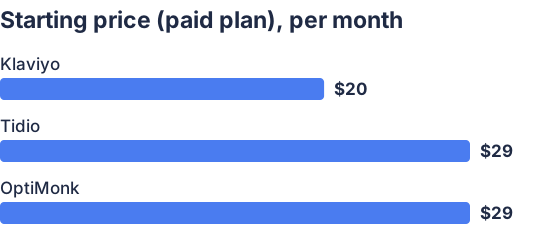
From the sourced table above, checked November 2026. Not charted, no single published figure: HubSpot Marketing Hub.
Prices are monthly-billed entry rates checked in November 2026. Actual costs can change with contact counts, traffic, conversation volume, add-ons, and promotions.
HubSpot Marketing Hub: best for CRM-led lead nurturing
HubSpot suits businesses that want to connect marketing follow-up with a shared customer and sales record. Marketing Hub can automate email follow-up, while Starter’s simple email workflows are limited to 10 actions; broader marketing automation and reporting are aimed at higher tiers. (knowledge.hubspot.com)
Its strength is joining marketing activity with CRM context, useful when people need several follow-ups before they buy. The tradeoff is that a low entry price does not include every automation feature: HubSpot’s email A/B testing is listed for Professional and Enterprise, and Professional has a much higher starting price than Starter. (knowledge.hubspot.com)
Klaviyo: best for behavior-triggered ecommerce messages
Klaviyo is a strong fit for stores that want to send email based on actions such as starting checkout, placing an order, or viewing a product. Its flows can use those events to send relevant reminders or post-purchase messages, and its Shopify instructions explain how to set up an abandoned-cart flow. (help.klaviyo.com)
This approach can bring back shoppers who are identifiable and eligible to receive marketing, but it cannot recover every abandoned cart: browsing flows, for instance, depend on Klaviyo recognizing the visitor. The email plan’s published $20 monthly entry price covers 500 active profiles and 5,000 emails per month; SMS is an add-on, and pricing scales with use. (klaviyo.com)
Tidio: best for answering questions while people shop
Tidio combines website live chat with rule-based Flows and an AI agent. Flows can respond to visitor actions, offer guidance, or surface a coupon; on Shopify, Tidio can also use store information such as carts, products, and order history during conversations. (tidio.com)
It is useful when unanswered questions or slow support could interrupt a purchase. It is less suited to running a full email-marketing program: its main strength is conversation and support, and limits or add-on charges depend on the service and usage selected. Tidio lists a free plan; its Shopify App Store listing shows a paid option at $29 per month. (tidio.com)
OptiMonk: best for targeted onsite popups
OptiMonk helps businesses show offers, signup prompts, or other popups to selected visitors. Targeting can make a message more relevant to the visitor’s page or behavior, and its popup tools support A/B testing different versions. (optimonk.com)
That makes it a practical choice for testing an offer or encouraging a visitor to subscribe before leaving. Use popups sparingly: an untargeted interruption can distract rather than help. OptiMonk’s free plan covers up to 10,000 monthly pageviews; its published monthly-billed paid entry price is $29, with higher tiers scaling by traffic. (optimonk.com)
Which automation tools improve conversion rates?
Klaviyo, HubSpot, Tidio, and OptiMonk are useful when the bottleneck is follow-up, lead nurturing, customer questions, or targeted onsite messaging. Pick the tool that addresses the step where potential buyers are dropping out, rather than adding automation for its own sake.
Their mechanisms differ. Email automation can remind an opted-in shopper about a relevant product or checkout; CRM workflows can prompt timely follow-up with a lead; chat can answer questions in the moment; and popups can present a focused offer or signup prompt. A/B testing can help compare versions, but the result still depends on a clear goal and enough useful data to interpret. (help.klaviyo.com)
Automation cannot fix every cause of lost sales. Baymard’s checkout research identifies usability and checkout flow as issues that can lead shoppers to abandon purchases, so a reminder message may not help if the underlying problem is confusing checkout or unexpected costs. (baymard.com)
How do these tools boost conversions?
They can make useful follow-up more timely, reduce delays in answering purchase questions, and let a business test different messages or offers. For example, a behavior-triggered reminder reaches someone after a relevant action, while a chat flow can offer help when a shopper asks about a product or order. (help.klaviyo.com)
Testing tools support a different step: they compare versions of an email or onsite message against a chosen metric, helping a team decide whether a change performed better. Shopify’s explanation of A/B testing emphasizes comparing versions and measuring outcomes; a test is not proof that every change will work for every audience. (shopify.com)
Which tools are best for Shopify stores?
Klaviyo fits Shopify stores that want automated email based on shopping behavior, including checkout or cart events. Tidio is a fit when customers need chat-based help, product suggestions, or order information while browsing. OptiMonk suits stores testing targeted popups, signup prompts, and offers. (help.klaviyo.com)
HubSpot can suit a Shopify business with a broader lead-management process, but its value depends on whether the business needs a CRM-led system rather than a store-focused email or chat tool. Shopify-specific support should not be the deciding factor for everyone: these products can also be used outside Shopify, and the best match depends on the sales journey being improved. (knowledge.hubspot.com)
How to choose the right automation tool?
Start with the problem and the metric: for example, checkout completion, qualified leads, or time to answer product questions. Then check whether the tool can act on the necessary customer or site data, whether it connects to your existing platform, and what plan includes the features you need.
Check usage limits before comparing entry prices. Klaviyo prices around active profiles and email volume, Tidio’s plans include conversation limits, and OptiMonk’s pricing scales with pageviews. HubSpot’s features also differ by tier, so confirm that the automation you intend to use is included in your plan. (klaviyo.com)
Finally, use a trial or free plan to check setup and integration, then measure one relevant outcome before expanding. For A/B testing, use a defined goal and compare versions fairly; Shopify notes that test results are more useful when you can gather enough traffic to interpret them. (shopify.com)
Which should you choose?
| Your situation | Best fit |
|---|---|
| Send behavior-triggered ecommerce emails | Klaviyo |
| Coordinate lead nurturing with CRM records | HubSpot Marketing Hub |
| Answer shoppers’ questions in live chat | Tidio |
| Test targeted onsite popups and offers | OptiMonk |
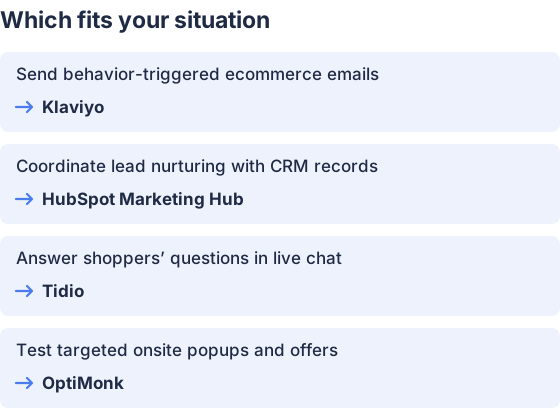
From the table above.
How this comparison was made
Prices and features come from each vendor’s published pages, checked in November 2026. The products were not tested hands-on.


