How can DTC beauty and wellness brands reach Gen Z online?
Compare TikTok, Instagram, YouTube, and Pinterest ads for Gen Z beauty marketing, with channel fit, creative formats, costs, and measurement tips.

Start with TikTok for Gen Z beauty discovery, use Instagram partnership ads to scale creator content, and add YouTube or Pinterest when the format fits. In a 2025 U.S. beauty-shopper study, TikTok led Gen Z beauty discovery, with Instagram the most popular alternative. Choose channels by the job: quick discovery, creator reach, detailed product education, or saveable inspiration. (tinuiti.com)
At a glance
| Option | Best for | Starting price (paid plan) | Free plan | Gen Z discovery fit | Native video or creator ads | Source |
|---|---|---|---|---|---|---|
| TikTok Ads | Fast discovery and demos | Usage-based | No | Yes | Yes | ads.tiktok.com |
| Instagram and Meta Ads | Creator reach and retargeting | Usage-based | No | Yes | Yes | facebook.com |
| YouTube Ads | Longer product explanations | Usage-based | No | Partial | Yes | business.google.com |
| Pinterest Ads | Saveable beauty inspiration | Usage-based | No | Yes | Partial | business.pinterest.com |
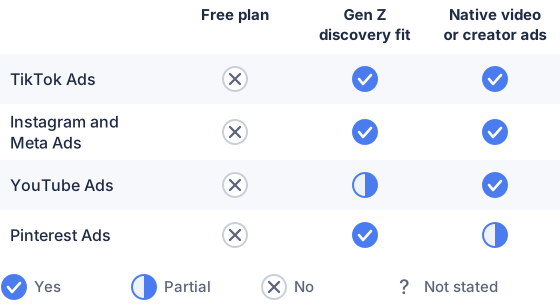
From the sourced table above, checked November 2026.
Ad platforms don’t use fixed monthly subscription plans: campaign costs depend on budgets, bids, and ad delivery. TikTok also publishes minimum campaign and ad-group budget thresholds, so check those before planning a small test. (ads.tiktok.com)
TikTok Ads: best for discovery-led demos
TikTok is a strong first test when the product can be shown quickly: a makeup application, hair routine, supplement format, or simple product comparison. Its Spark Ads let brands promote their own or an authorized creator’s organic post while keeping the post’s engagement attached. TikTok’s current budget guidance, checked in November 2026, says campaign budgets must exceed $50 and daily ad-group budgets must exceed $20; that threshold can make very small tests harder. (ads.tiktok.com)
Instagram and Meta Ads: best for creator-led reach
Instagram is a practical complement to TikTok for Reels, creator collaborations, and paid amplification of organic posts. Meta’s partnership ads can run creator content under the creator’s handle, and its creator marketplace helps eligible brands find and work with creators. This makes it useful for extending a successful creator idea, but a paid partnership still needs a creator who fits the product and a clear, credible claim. (about.fb.com)
YouTube Ads: best for product education
YouTube suits brands that need time to demonstrate a routine, explain ingredients, or answer product questions. Google Ads supports Shorts placements and vertical video; longer video formats can give more room for detailed explanations. It is less tailored to quick trend participation than TikTok, so use it when the video itself helps shoppers understand or evaluate the product. (business.google.com)
Pinterest Ads: best for saveable inspiration
Pinterest can fit beauty and wellness products that connect to routines, looks, or planning: for example, skincare steps, makeup ideas, or a seasonal wellness routine. Its formats include image, video, carousel, and collection ads, and the platform describes Gen Z as a fast-growing audience that uses Pinterest to find product and brand information. It is a better fit for inspiration people may save than for fast, personality-led creator content. (business.pinterest.com)
How can DTC beauty and wellness brands best reach Gen Z with online advertising?
Pair creator-style short video with a clear route to purchase, then add other channels to match the product’s buying journey. In Tinuiti’s January 2025 survey of 1,003 U.S. beauty shoppers, 62% of Gen Z respondents said they had discovered a beauty product on social media and gone on to purchase it; TikTok was their leading social platform for beauty discovery. These findings support testing TikTok first for beauty discovery, not assuming the same channel will lead for every wellness product or every Gen Z audience. (tinuiti.com)
Use Instagram to extend creator content and reach people who respond to Reels; use YouTube when buyers need more explanation, and Pinterest when the product lends itself to saved ideas or plans. Keep a mix of discovery and conversion campaigns, but don’t spread a small budget evenly across every platform. Test one or two channels with distinct roles, and expand when tracked purchases, not just views, support it. Google Ads has no fixed monthly subscription; advertisers set campaign budgets and pay based on auction pricing and the action or exposure purchased. TikTok publishes minimum budget thresholds, so account for those when choosing where to start. (business.google.com)
Which channels work best for reaching Gen Z?
For beauty discovery, start by testing TikTok and Instagram; use YouTube or Pinterest where their formats match the product and shopping task. The 2025 Tinuiti study found TikTok was Gen Z’s top social platform for beauty discovery, while Instagram was the most popular alternative among Gen Z respondents who said they would use another platform if TikTok were unavailable. (tinuiti.com)
Those results come from beauty shoppers, not every wellness category, so treat them as a starting point rather than a guarantee. YouTube is a strong option for explaining how to use a product or what distinguishes it, while Pinterest can reach people looking for product and brand ideas. In practice, compare channels by whether they bring the right visitors and sales at an acceptable cost, not by audience size alone. (business.google.com)
What creative formats and messaging resonate with Gen Z?
Test vertical video that shows the product in use, answers a real question, or demonstrates a routine, with creator-led versions alongside brand-made versions. In Tinuiti’s 2025 survey, reviews were the most-consumed beauty video type, followed by tutorials; Get Ready With Me videos and shopping hauls also featured. That supports testing reviews, tutorials, routines, and product comparisons rather than assuming a polished brand spot will do the job. (tinuiti.com)
Lead with the benefit or problem the product addresses, show its texture or use, and make the next step clear. Be specific about what a product does and avoid unsupported promises, especially for wellness products: the FTC says health-related claims should be truthful, not misleading, and supported by appropriate scientific evidence. If a creator was paid, received free product, or has another material connection, make the disclosure clear in the endorsement itself; the FTC advises that video disclosures appear in the video, not only in its description. (search.ftc.gov)
How should brands measure and optimize Gen Z ad campaigns?
Measure purchases and customer acquisition cost alongside attention metrics, and compare results by channel, audience, and creative. Track video watch time and completion, clicks, add-to-carts, purchases, and revenue; use the metrics that match the campaign’s goal. Google Ads conversion tracking can measure actions such as purchases, sign-ups, and add-to-carts after an ad interaction. (business.google.com)
Set up conversion tracking before launch and use consistent campaign links so sales can be compared across channels. Test one meaningful creative variable at a time, such as the opening, creator, demonstration, or offer; refresh ads when attention or conversion performance falls. Don’t treat platform-reported return on ad spend as proof that the ad caused every sale: compare attributed results with overall sales and, where practical, use a holdout or other incrementality test. Set a maximum acceptable acquisition cost based on your margins and repeat-purchase economics, then shift spend toward the combinations that meet it. TikTok recommends spacing budget changes and limiting increases during its learning phase, rather than making frequent adjustments that make results harder to interpret. (ads.tiktok.com)
Which should you choose?
| Your situation | Best fit |
|---|---|
| Fast product discovery through short demos | TikTok Ads |
| Amplifying creator Reels and reaching past visitors | Instagram and Meta Ads |
| Explaining a product or routine in video | YouTube Ads |
| Promoting routines, looks, or ideas people can save | Pinterest Ads |
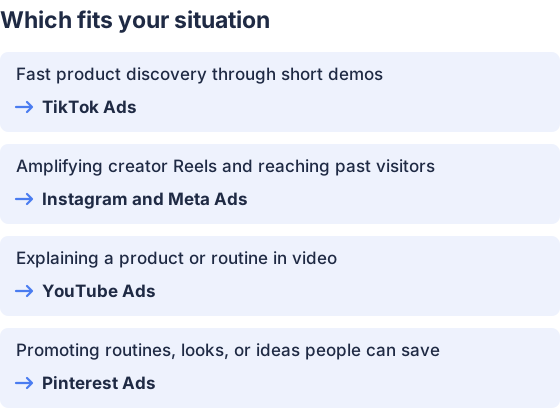
From the table above.
How this comparison was made
Prices and features come from each vendor’s published pages, checked in November 2026. The products were not tested hands-on.


