Which Fleece and Jacket Brands Use Digital Marketing Innovatively?
See how Patagonia, Columbia, The North Face, Arc’teryx, and Fjällräven use digital marketing for storytelling, campaigns, and targeted ads.

Patagonia, Columbia, The North Face, Arc’teryx, and Fjällräven stand out for digital marketing that gives outdoor stories, product ideas, or customer participation a distinctive role. Patagonia is a strong fit for repair and resale storytelling; Columbia for playful, unusual campaigns; and the others for immersive experiences, technical-product education, or targeted multichannel ads.
At a glance
| Option | Best for | Starting price (paid plan) | Free plan | Digital-marketing evidence | Source |
|---|---|---|---|---|---|
| Patagonia | Repair and resale storytelling | Not applicable | Not applicable | Yes | patagonia.com |
| Columbia | Unexpected, playful campaigns | Not applicable | Not applicable | Yes | marketingdive.com |
| The North Face | Immersive product storytelling | Not applicable | Not applicable | Yes | prnewswire.com |
| Arc’teryx | Editorial and learning experiences | Not applicable | Not applicable | Yes | rga.com |
| Fjällräven | Targeted, multichannel advertising | Not applicable | Not applicable | Yes | about.ads.microsoft.com |
Paid-plan pricing and free plans do not apply to apparel brands; their published pages describe products and campaigns, not subscription plans.
Patagonia: best when repair and resale are part of the story
Patagonia makes Worn Wear a visible part of its online experience, connecting used-gear shopping with trade-ins, repairs, care advice, and stories about keeping clothes in use. That gives its digital marketing a concrete customer action beyond buying new gear: browse used products, trade something in, or get a garment repaired. Its strength is the close fit between its message and the services it offers; the approach is less about flashy digital effects than about building an ongoing purpose-led story. (Patagonia’s Worn Wear pages describe used gear, repairs, trade-ins, and care; its Worn Wear stories extend the theme editorially. (patagonia.com))
Columbia: best when the brand needs a memorable campaign hook
Columbia is a good example of using humor and unexpected concepts to stand apart in outdoor apparel marketing. Marketing Dive reported that its “Engineered for Whatever” platform included deliberately unusual ideas, including a campaign stunt offering Helvetia fleece pullovers to people who ordered by fax, supported by influencer content. That kind of hook can earn attention and give social posts a clear premise, though it may be less suited to brands seeking a restrained or purely technical tone. (Marketing Dive’s report discusses the campaign and Columbia’s mix of digital and offline activity. (marketingdive.com))
The North Face: best for immersive product storytelling
The North Face has paired product launches with digital formats that help explain the gear and invite audience participation. For its FUTURELIGHT launch, campaign materials describe a mix of educational web films, social content, digital banners, and augmented-reality experiences; a separate campaign created a crowdsourced digital archive of people’s stories and images connected to their jackets. These examples make the brand a fit for marketers interested in extending product storytelling beyond conventional product ads, although the campaigns cited here are past examples, not evidence that every current launch uses the same approach. (FUTURELIGHT campaign details and The North Face’s archive announcement describe those activations. (pierreangeaznar.com))
Arc’teryx: best for editorial and learning experiences
Arc’teryx uses an editorial hub to publish stories across gear, climbing, snow, trail, and other themes, helping connect product categories to the activities they are made for. In a Japan winter campaign, agency R/GA describes a Snow Hub on the brand’s e-commerce site alongside immersive story content, designed to combine digital information with physical brand experiences. This suits brands that want to help customers understand technical equipment through context and education; it requires more than short-form promotional posts to work well. (Arc’teryx Stories and R/GA’s campaign account document these editorial and campaign formats. (blog.arcteryx.com))
Fjällräven: best for targeted, multichannel advertising
Fjällräven is a useful reference for joining online ads, video, streaming, social media, and digital out-of-home placements around a clear brand story. In a campaign described by Microsoft Advertising, the brand used interactive ads to introduce its values and video to explain product durability, with placements across formats including streaming and online video. This is a fit for marketers interested in coordinated media and audience targeting, rather than one viral creative idea; the case study is a partner-published account, so reported campaign results should be read as the platform’s own case-study claims. (Microsoft Advertising’s Fjällräven case study outlines the media mix and campaign approach. (about.ads.microsoft.com))
Which fleece and jacket brands are known for innovative digital marketing?
Patagonia, Columbia, The North Face, Arc’teryx, and Fjällräven are all useful examples, but each illustrates a different kind of innovation. Patagonia builds online storytelling around repair and resale, while Columbia uses playful campaign concepts to attract attention. The North Face has experimented with interactive and participatory campaigns; Arc’teryx develops editorial and educational digital experiences; and Fjällräven demonstrates how targeted advertising can work across multiple channels. (Patagonia, Columbia coverage, The North Face archive announcement, Arc’teryx campaign account, and Fjällräven case study. (patagonia.com))
The useful distinction is what each brand makes its marketing do. Patagonia turns a sustainability message into services and shopping paths; Columbia makes the campaign idea itself a talking point; and The North Face uses digital storytelling to make product technology or customer experience more vivid. Arc’teryx emphasizes learning and narrative, while Fjällräven’s example centers on planning media across different digital formats. These are examples to study, not proof that one brand’s method will work unchanged for another company. The right reference depends on the intended outcome: customer participation, product education, brand character, or coordinated reach.
For fleece and jacket companies, the examples also suggest different content priorities. A brand with repair, resale, or care services can make those actions part of its digital journey, as Patagonia does. A brand launching technical materials can use demonstrations and explainers, while a company with a distinctive personality can make the campaign premise itself easier to share. Digital storytelling works best when its format reinforces the brand’s real offer, rather than feeling like an unrelated stunt. The cases here show varied approaches; they do not establish that any one channel or campaign mechanic guarantees sales.
Which should you choose?
| Your situation | Best fit |
|---|---|
| You want repair, trade-in, and resale storytelling | Patagonia |
| You want humor and unexpected campaign concepts | Columbia |
| You want interactive product-launch storytelling | The North Face |
| You want editorial content about technical gear | Arc’teryx |
| You want coordinated, targeted advertising | Fjällräven |
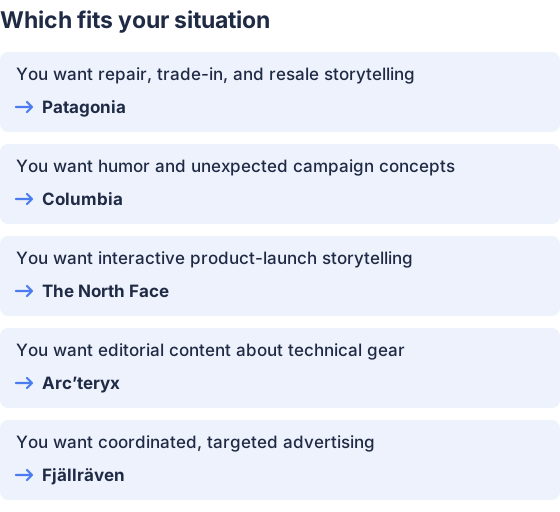
From the table above.
How this comparison was made
Campaign and feature descriptions come from the brands’ published pages, campaign partners, and reporting, checked in November 2026; paid-plan pricing and free plans do not apply to these apparel brands. The products and campaigns were not tested hands-on.


