Which Social Selling Strategies Work Best for Beauty Advocates?
Compare Instagram, TikTok, YouTube, and Facebook for beauty and wellness social selling, with tips to build trust and measure campaign results.

The strongest strategy is useful, honest product education paired with trackable recommendations: Instagram suits relationship-building, TikTok suits short-form discovery, and YouTube suits detailed tutorials. All four platforms below can be used free; paid promotion pricing is listed as usage-based in the comparison.
At a glance
| Option | Best for | Starting price (paid plan) | Free plan | Native product discovery | Source |
|---|---|---|---|---|---|
| Trust and product demos | Usage-based | Yes | Yes | business.facebook.com | |
| TikTok | Short-form discovery | Usage-based | Yes | Yes | ads.tiktok.com |
| YouTube | Detailed tutorials | Usage-based | Yes | Yes | support.google.com |
| Community and conversation | Usage-based | Yes | Partial | facebook.com |
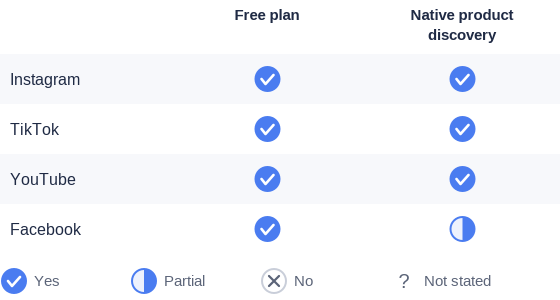
From the sourced table above, checked November 2026.
Instagram: best for beauty routines and ongoing relationships
Instagram supports product tags in content, including Reels, for eligible accounts that have Instagram Shopping set up. That makes it a natural fit for routine demonstrations, shade comparisons, and answering product questions in Stories or comments. Product tagging depends on the brand’s catalog and account setup, so advocates should also use a clear, trackable link when a tag is unavailable. (business.facebook.com)
TikTok: best for discovery through short videos and LIVE
TikTok Shop lets approved creators feature products in videos, LIVE content, and a profile Showcase; creators can earn commissions on qualifying affiliate sales. This suits quick demonstrations, application tips, and product comparisons that show the product in use. The trade-off is that affiliate and shopping features depend on eligibility and the products available through the Shop. (ads.tiktok.com)
YouTube: best for tutorials people can revisit
YouTube is a strong fit for longer reviews, step-by-step routines, and comparisons that need more explanation than a short clip allows. Eligible creators in the United States can use the YouTube Shopping affiliate program to tag participating products and review affiliate metrics in YouTube Studio. Joining is not automatic: creators must meet the program’s eligibility requirements, and commissions and attribution windows vary by seller and product. (support.google.com)
Facebook: best for community discussion and LIVE
Facebook can support relationship-led promotion through community discussion, video, and brand collaborations. Meta says branded-content posts can give both the creator and partner access to reach and engagement insights, which can help when reviewing a campaign. It is a less direct choice for creator product discovery than TikTok Shop or YouTube Shopping, so use clear links or codes to connect posts with sales. (ky-kg.facebook.com)
Which social selling strategies work best for beauty advocates promoting wellness and beauty products?
The most useful strategies combine real product demonstrations, helpful education, and a simple way to shop. Show how a product fits into a routine, explain who it may suit, and give a clear link, product tag, or code; choose the platform based on whether the content needs a quick demonstration, a conversation, or a detailed tutorial.
Make the recommendation specific rather than repeating product claims. For example, describe how a texture feels or how a makeup shade appears in a particular light, and distinguish personal experience from facts supplied by the brand. Invite practical questions about use, ingredients, or availability, then reply with information you can verify. For wellness products, be especially cautious about claims: FDA says a cosmetic marketed to treat or prevent disease, or affect the body’s structure or function, may be regulated as a drug. (fda.gov)
Use a distinct link or promotional code for each platform or campaign when possible. That makes it easier to compare which content brings visits and purchases, rather than judging a post only by likes. Keep recommendations consistent with the product information and any rules supplied by the brand, and don’t promise results that you cannot substantiate.
How can beauty advocates build trust and engagement on social media?
Show the product honestly, explain why you chose it, and make it easy for people to ask follow-up questions. Trust is easier to maintain when recommendations include relevant context, such as how you use a product, what you do not know about it, or who might want to check the ingredients before buying.
Disclose relationships clearly whenever you receive payment, free products, discounts, or another benefit. The FTC says the disclosure should be hard to miss and placed with the endorsement; for video, it should appear in the video itself, not only in its caption. Platform labels can help, but the disclosure still needs to be understandable to viewers. (ftc.gov)
Engagement works best as a two-way conversation, not a stream of sales pitches. Respond to questions, correct errors plainly, and share follow-up content when the same practical question comes up repeatedly. For wellness or skincare concerns that call for medical advice, avoid diagnosing or suggesting that a product treats a condition.
Which social platforms work best for promoting beauty and wellness products?
Instagram is a good fit for routine-led content and ongoing audience interaction; TikTok is useful when the product can be explained quickly through a demonstration; and YouTube is better when shoppers need a longer review or tutorial. Facebook can suit advocates whose audience already gathers in communities or engages with their LIVE videos.
Choose one primary platform based on the kind of content you can make consistently, then reuse or adapt the content elsewhere. A short application demo may work well as a TikTok or Reel, while a routine with several steps may need a YouTube video. Don’t assume every platform’s shopping tools are available to every advocate: Instagram product tags require setup, and YouTube Shopping is limited to eligible creators and participating sellers. (business.facebook.com)
How can advocates measure the success of social selling campaigns?
Track outcomes that match the campaign goal: views and reach for awareness, saves and meaningful comments for useful content, link clicks for shopping interest, and attributed orders or commissions for sales. Use platform analytics plus distinct links or codes where available, and compare results by post, platform, and product.
A simple comparison can include click-through rate, orders per click, conversion rate, and commission earned, alongside engagement. Interpret those figures in context: a tutorial may earn saves and later purchases, while a fast product demo may drive more immediate clicks. YouTube’s affiliate program provides eligible creators with product tagging and campaign metrics; Meta also provides reach and engagement insights for branded-content partners. (support.google.com)
Set a baseline before posting and review results after a consistent period. If a post earns attention but few clicks, clarify the call to action or make the product link easier to find. If clicks occur without purchases, check whether the product page, offer, or audience match may be the issue before repeating the same approach.
Which should you choose?
| Your situation | Best fit |
|---|---|
| You want to demonstrate a routine and answer questions | |
| You can make quick, engaging product demos | TikTok |
| The product needs a detailed review or tutorial | YouTube |
| Your audience already talks in groups or LIVE sessions |
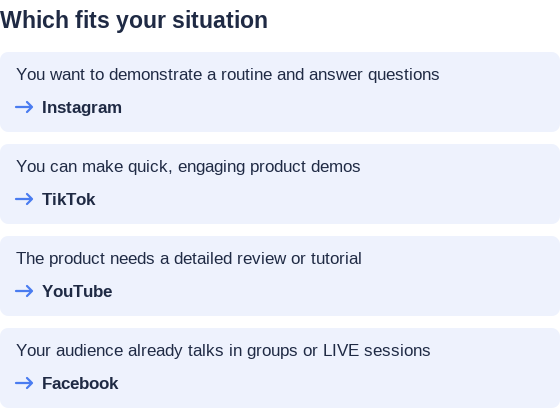
From the table above.
How this comparison was made
Platform features and optional paid-promotion pricing were checked against each platform’s published pages in November 2026. The platforms were not tested hands-on.


