Which Microphone Brands’ Pricing Best Builds Customer Loyalty?
Compare RØDE, Shure, and Audio-Technica pricing for repeat purchases, and learn how to measure microphone customer loyalty.

The pages checked identify no proven repeat-purchase leader; RØDE offers a clear price ladder, Shure suits reliability-led buyers, and Audio-Technica offers value. These are best-fit judgments based on published products and prices, not proof that one brand creates more repeat buyers.
At a glance
| Option | Best for | Starting price (paid plan) | Free plan | Entry price published | Public repeat-rate data | Source |
|---|---|---|---|---|---|---|
| RØDE | Entry-to-premium upgrades | Not applicable | No | Yes | No | rode.com |
| Shure | Reliability-led buyers | Not applicable | No | Yes | No | shure.com |
| Audio-Technica | Value-conscious buyers | Not applicable | No | Partial | No | audio-technica.com |
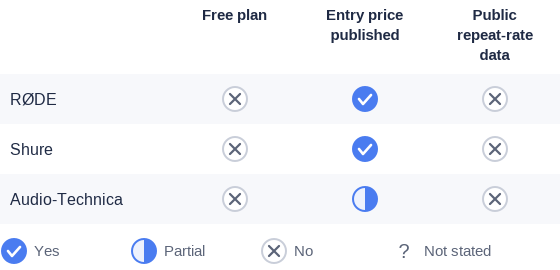
From the sourced table above, checked November 2026.
These companies sell hardware, not paid plans, so a subscription starting price and free-plan comparison do not apply. The table’s price-visibility column refers to published microphone prices, not subscription pricing.
RØDE: best for a visible upgrade path
RØDE is a strong fit for buyers who want a relatively accessible first mic and room to move into pricier equipment later. As checked in November 2026, its US product page lists the Wireless Micro at $99 and the Wireless PRO at $299; those examples make a clear step-up ladder, though they serve different recording needs. (rode.com)
The brand also publishes product-specific warranties. Its support page lists a five-year warranty for Wireless Micro and several other wireless products, which can add reassurance without changing the purchase price. Warranty coverage is a support benefit, not evidence that owners actually buy again. (help.rode.com)
Shure: best for reliability-led buyers
Shure suits customers who value established wired microphones and a range of related recording products. Its US SM58 page lists the microphone at $159 as checked in November 2026, and Shure sells accessories such as replacement grilles and microphone clips for compatible models. That gives owners ways to maintain or adapt equipment, but it does not establish that Shure’s pricing produces more repeat purchases. (shure.com)
Shure also presents bundles and products for content creation, including microphones and headphones. Bundles can make a larger setup purchase more convenient, but compare the bundle’s total price and included gear with buying separately before treating it as a loyalty incentive. The company does not publish a brand-level microphone repeat-purchase rate on the pages checked. (shure.com)
Audio-Technica: best for value-conscious buyers
Audio-Technica may appeal to buyers seeking an affordable entry point. Its official 2025 professional-microphone catalogue lists an indicative US price of $99 for the AT2020. Because that figure comes from a 2025 catalogue, it is not confirmation of a current November 2026 selling price; the latest official catalogue price located is a guide, not a live offer. (docs.audio-technica.com)
That published entry price supports a value-oriented comparison, but price alone cannot establish loyalty. Check current retailer prices, included accessories, and warranty terms for the exact model being considered. Audio-Technica does not publish brand-level repeat-purchase results in the pages checked.
1. Which microphone brands’ pricing best boosts customer loyalty and repeat purchases?
There is not enough published evidence to name a proven winner; RØDE has the clearest visible step-up pricing, Shure offers a reliability-oriented option, and Audio-Technica has a documented value-priced entry model. These are comparisons of published offers, not measured differences in customer loyalty.
Microphones are durable goods, so customers may return for a different use, a second recording setup, or accessories rather than replace a working microphone regularly. A brand’s repeat-purchase rate therefore depends partly on what counts as a repeat purchase and how long customers are observed. Standard marketing references distinguish a calendar-time repeat rate from repurchase on a customer’s next purchase occasion, so comparisons need a consistent definition. (ptgmedia.pearsoncmg.com)
The practical distinction is what each pricing structure makes easy. RØDE displays a low-to-higher-priced path in its wireless range; Shure has individual products and bundles; and Audio-Technica has an official catalogue price for an entry model. None of those facts demonstrates that the pricing itself causes customers to return. The brand pages checked do not provide comparable repeat-purchase results, so any stronger ranking would be speculation.
2. What pricing strategies encourage microphone customers to buy again?
Use a clear range of prices, offer useful bundles, and give existing owners a fair reason to add compatible gear instead of relying on permanent discounts. These approaches can make the next purchase easier to understand, but brands should test whether they increase profitable repeat buying.
A tiered range can make a second purchase relevant when a customer’s needs change: for example, moving from a simple setup to wireless recording or a more capable system. Bundles can reduce the effort of choosing compatible equipment, while accessories and replacement parts can support existing products. The useful test is whether these offers lead to additional purchases at acceptable margins, not whether they merely raise the average order value once.
Use discounts selectively and compare them with non-discount offers, such as a bundle or accessory credit. Research on promotions in consumer-goods categories found that promotion purchases did not necessarily create a later increase in buyers’ propensity to choose the brand; that finding is not microphone-specific, but it is a reason not to assume that a sale builds loyalty by itself. (emerald.com)
3. How can microphone brands compare repeat-purchase rates across pricing models?
Compare customer cohorts acquired under each pricing model, using the same follow-up period and a consistent definition of “repeat purchase.” For each cohort, report the share of first-time buyers who make a later qualifying purchase, and show the count and time window alongside the percentage.
Start with transaction records that can identify customers across purchases; surveys are not required. Group customers by their first purchase and by the offer they received, such as regular price, temporary discount, or bundle. Compare only cohorts that have had the same amount of time to buy again, since newer buyers have had less opportunity to return. (nyu.manifoldapp.org)
Separate a later microphone purchase from accessory purchases, and report both if both matter to the business. Also compare revenue and gross margin per cohort: a discount may increase the number of repeat buyers while reducing the value of each sale. Where possible, test offers with comparable customer groups over the same period, and account for differences in model, sales channel, and product availability.
Which should you choose?
| Your situation | Best fit |
|---|---|
| You want a visible price ladder | RØDE |
| You prioritize established wired models | Shure |
| You want a value-priced entry model | Audio-Technica |
| You need proof of the highest repeat rate | None published |
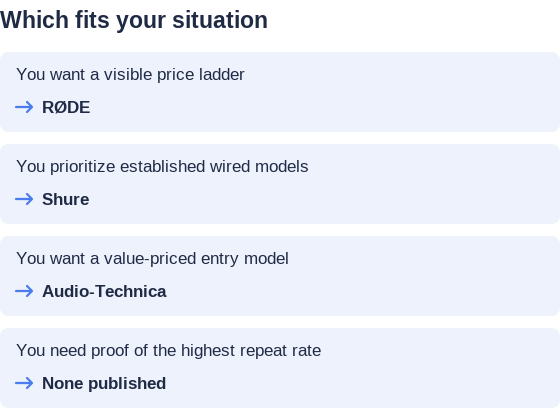
From the table above.
How this comparison was made
Prices and product features come from each vendor’s published pages, checked in November 2026; Audio-Technica’s cited AT2020 price is from its official 2025 catalogue, and a current direct price was not verified. The products were not tested hands-on.


