Which UX Research Tools Support Multiple Languages?
Compare Maze, Lyssna, and UserTesting for multilingual UX research, including interview translation, language filters, and study support.

Maze localizes its testing interface; Lyssna supports interviews in 30 languages; UserTesting offers language filters and selected non-English study features. The right fit depends on whether you need translated interview logistics, language-specific recruitment, or localized study content your team can translate and manage in separate versions.
At a glance
| Option | Best for | Starting price (paid plan) | Free plan | Language support | Source |
|---|---|---|---|---|---|
| Maze | Prototype and interface testing | Quote | Yes | Partial | maze.co |
| Lyssna | Multilingual moderated interviews | $199/mo | Yes | Yes | help.lyssna.com |
| UserTesting | Global research programs | Quote | No | Partial | usertesting.com |
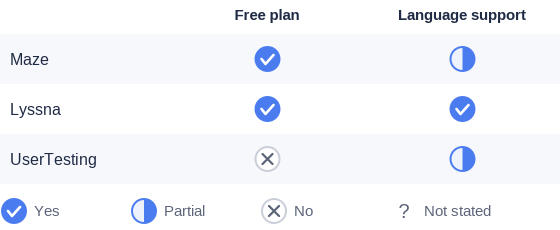
From the sourced table above, checked November 2026.
Which UX research tools support multiple languages?
All three support some multilingual research, but their features differ. Maze translates its testing interface while leaving study content to you; Lyssna translates key parts of the interview experience into 30 languages; UserTesting supports selected non-English study languages and participant language filters. Check that the specific language and study method you need are supported before choosing.
Maze: best for multilingual prototype and interface tests
Maze can display its testing interface in supported languages, including Spanish, French, German, Japanese, and Arabic. Participants can see the interface language based on their browser settings, or a researcher can set it in the study link; questions and task instructions still need to be translated by the researcher. Maze also says language-targeting filters for its participant panel are available to Enterprise customers, and those filters do not guarantee that participants will respond in the selected language. (help.maze.co)
That makes Maze a fit when you want to test a localized prototype or product flow and can prepare separate, translated study versions. Its documentation says that multiple language variants cannot be added to one study, so plan to create a separate study for each language. Maze’s pricing page lists a free plan and custom-priced Enterprise plan; as of November 2026, the lowest published paid price is not stated, and the Enterprise plan directs customers to sales. (maze.co)
Lyssna: best for multilingual moderated interviews
Lyssna’s interview feature supports a translated participant experience in 30 languages, including emails, calendar invitations, and the participant interface. The feature works whether participants come from Lyssna’s panel or are recruited by the research team. This is useful when you need to manage interviews across languages without translating each of those participant-facing steps yourself. (changelog.lyssna.com)
The published language claim is specifically about interviews and their participant experience; don’t assume that every study type or all research content is automatically translated. Researchers still need to ensure that prompts, prototypes, and interview questions are appropriate for each audience. As of November 2026, Lyssna lists a free plan and a Growth plan at $199 per month when billed monthly; panel responses are charged separately. (help.lyssna.com)
UserTesting: best for global research programs
UserTesting lets researchers set language requirements for participants in certain non-English tests and filter for contributors who say they speak the selected language. Its current support documentation lists English, Spanish, French, and German for surveys. Other participant-facing elements and device settings can have additional language constraints, so teams should confirm that their planned study setup works in the intended language. (help.usertesting.com)
This makes UserTesting worth considering when your research program needs access to a broad participant network as well as language targeting. It is not a promise that every part of the platform, study method, or participant experience is available in every language: for example, the documentation says right-to-left task languages such as Arabic and Hebrew are not supported. As of November 2026, the plans page describes pricing as customized and asks prospective customers to speak with its account team; it does not publish a fixed starting price. (usertesting.com)
Which should you choose?
| Your situation | Best fit |
|---|---|
| You need translated interview logistics and participant screens | Lyssna |
| You can translate study content and want localized prototype tests | Maze |
| You need language filters and a global contributor network | UserTesting |
| You want a free starting point for quick testing | Maze |
| You need a published monthly subscription price | Lyssna |
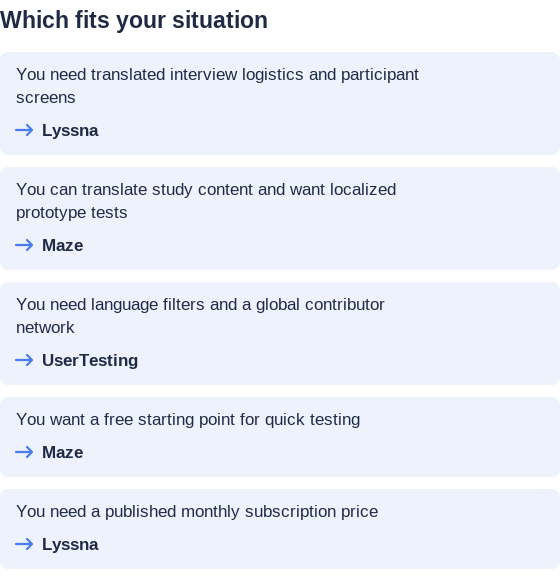
From the table above.
How this comparison was made
Prices and features come from each vendor’s published pages, checked in November 2026. The products were not tested hands-on.


